

Elliot Weld
December 26, 2025
2nd Circ. Hints Bankman-Fried's $11B Forfeiture Is Overkill

5 min
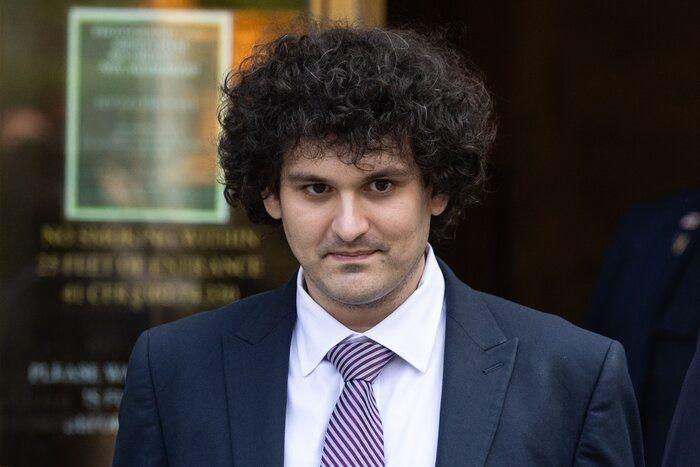
Image source: Unknown

AI-made summary
- The Second Circuit Court questioned the constitutionality of an $11 billion forfeiture order against Sam Bankman-Fried, founder of FTX, following his conviction and 25-year prison sentence for defrauding customers
- Judges expressed concern over the size of the penalty and its relation to FTX's bankruptcy proceedings, while the government argued the forfeiture matches the scale of the fraud
- The panel also discussed the admissibility of evidence regarding Bankman-Fried's reliance on legal counsel during his trial.
The Second Circuit suggested Tuesday that the government's $11 billion forfeiture order against Sam Bankman-Fried may be unconstitutionally large, noting that the staggering amount tops the raft of cases tasking the court with determining if such money judgments pass Eighth Amendment muster.
A Second Circuit panel seemed satisfied with the evidence backing the fraud conviction and prison term imposed on Sam Bankman-Fried, but questioned the size of the money penalty. (Yuki Iwamura/Bloomberg via Getty Images) Though a three-judge panel seemed satisfied there was, as one judge put it, "very substantial" evidence backing the fraud conviction and 25-year prison term imposed on the embattled founder of the FTX cryptocurrency exchange, the court peppered a Manhattan federal prosecutor with questions about the size of the money penalty and its interplay with FTX's ongoing bankruptcy proceedings.
Circuit Judge Barrington Parker at one point appeared exasperated at Assistant U.S. Attorney Nathan Rehn's responses to panel questions, including hypothetical scenarios about where the forfeiture amount would stand if the victims had been made whole by other means.
"This is an important issue to us. You have to please stop bobbing and weaving on it," Judge Parker said.
Bankman-Fried was sentenced to 25 years in prison in March 2024 after being convicted the previous November of defrauding FTX customers by improperly spending billions of dollars of their money.
Rehn argued that under Second Circuit precedent, it was proper for U.S. District Judge Lewis Kaplan to enter a money judgment against Bankman-Fried. Circuit Judge Maria Araújo Kahn said there currently were several cases pending before the Second Circuit related to whether some money judgments could be unconstitutionally large under the Eighth Amendment and asked Rehn what the government's position was. Judge Kahn said the "level here is pretty high" compared to other cases where the forfeiture order is only in the millions.
In assessing a forfeiture order in that context, Rehn said, the primary issue is "you're comparing the size of the forfeiture to the size of the defendant's crime." In this case, due to the "enormity" of Bankman-Fried's fraud, "you do end up with a very large forfeiture order, but that's calibrated to the enormity of the defendant's conduct," Rehn said.
Asked by Judge Parker what legitimate penal purpose an order of that magnitude serves, Rehn said an order that covers the full amount of misappropriated funds was an important tool to deter criminals from profiting from their improper conduct.
Hypothetically, if all the victims in this case were to be made whole, Circuit Judge Eunice C. Lee asked, how is the $11 billion forfeiture order still justified? Rehn said in this case specifically, the U.S. Department of Justice is using forfeited funds for remission to victims.
"The way this was set up and structured in this case was specifically to make sure that those forfeited funds would be used to make victims whole," Rehn said.
Rehn said there had been some recovery of victim losses through the FTX bankruptcy case and a larger amount through civil forfeiture actions.
"There isn't a situation where somehow the defendant is going to have to pay more than what victims ultimately may recover," Rehn said.
Hypothetically, Judge Lee said, if Bankman-Fried were to at some point make $4 billion for the forfeiture payment, but the victims were somehow made whole otherwise, he'd still be on the hook for another $7 billion.
Rehn prompted Judge Parker's "bobbing and weaving" comment when he responded that, in that case, the forfeiture order would still be in effect but, practically, the odds of recovering that much would be unlikely.
Rehn said Second Circuit precedent establishes that it's permissible for forfeiture to be a separate obligation from restitution on a defendant, as merely paying back victims is not a sufficient deterrent to fraud. In large victim loss cases, the DOJ may use forfeited funds for remission to victims, which is what it is doing in this case, Rehn said.
The bankruptcy case will eventually end, Judge Kahn said, whereas the forfeiture order will carry on until it's satisfied. At that point, there would be "no mechanism in effect to make the victims whole, if you will, in terms of what they expected to earn as opposed to what their assets were valued at in bankruptcy," the judge said. Rehn responded that in that case, the "currently existing" mechanism would no longer be in effect but the DOJ has the ability to accept victim claims.
Rehn said the "typical practice, in my experience" is that, although it is not obligated, the DOJ will use forfeited funds to make victims whole in the majority of instances.
On the issue of the fairness of Bankman-Fried's trial, his attorney Alexandra Shapiro of Shapiro Arato Bach LLP said the court had improperly blocked the defense's rebuttal to the government's claim that the victims' money was gone forever, and also disallowed evidence about Bankman-Fried's reliance on the advice of attorneys at FTX.
Judge Kahn countered that Judge Kaplan had not disallowed all testimony about the involvement of FTX's attorneys. For example, she said, Bankman-Fried was allowed to show evidence that those lawyers had worked on FTX's retention policies as opposed to other acts where Bankman-Fried had specifically said he'd not sought out the advice of counsel.
Shapiro said Bankman-Fried was allowed to testify as to his state of mind, but not being allowed to corroborate that testimony with more objective evidence was "extremely prejudicial."
But Bankman-Fried had "clearly told the court" that he wasn't using an advice-of-counsel defense, Judge Kahn said, adding that she had not "heard of a quasi-advice-of-counsel defense."
"You either rely on advice of counsel defense or in this case, as I understood it, your client was trying to tell the judge that the presence of counsel was something that he should talk about," Judge Kahn said.
Shapiro said they were not challenging the sufficiency of the government's evidence, only saying that the issue of Bankman-Fried's state of mind should have been left to the jury instead of being excluded by Judge Kaplan.
Judge Lee said she did not think that was a fair characterization and said evidence about the involvement of lawyers had to be balanced against potential prejudicial effect.
"Prejudicial effect in the sense of, the suggestion that lawyers were involved therefore everything going on was legal, but if the lawyers in fact were not aware of the withdrawal or the transfers or very specific actions that are related to the counts, there's a fear that it could be misleading," Judge Lee said.
U.S. Circuit Judges Maria Araújo Kahn, Barrington Parker and Eunice C. Lee sat on the panel for the Second Circuit.
The government is represented by Nathan Rehn, Danielle Kudla and Nicholas Roos of the U.S. Attorney's Office for the Southern District of New York.
Bankman-Fried is represented by Alexandra Shapiro, Jason Driscoll and Theodore Sampsell-Jones of Shapiro Arato Bach LLP.
The case is U.S. v. Bankman-Fried, case number 24-961 in the U.S. Court of Appeals for the Second Circuit.
Article Author
Elliot Weld
 The Sponsor