

Hayley Fowler
December 26, 2025
'Gun At My Head': Jury Hears From NASCAR Contract Holdout
5 min
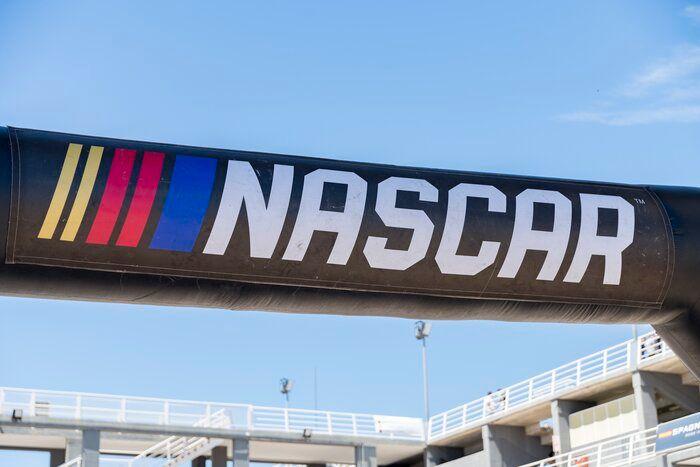
Image source: Unknown

AI-made summary
- In a federal antitrust trial in North Carolina, NASCAR faces allegations from race teams 23XI Racing and Front Row Motorsports that its 2025 charter contracts suppress competition by restricting teams and tracks
- Team owner Bob Jenkins testified he felt coerced into signing, while NASCAR President Steve O'Donnell defended the league's practices and investments
- The trial, overseen by Judge Kenneth Bell, has featured testimony on exclusivity provisions and the financial impact of new race venues.
Team owners felt strong-armed into signing their 2025 race agreements with NASCAR despite the "egregious" terms, owner Bob Jenkins told a federal jury in North Carolina Thursday on his second day testifying in the high-profile antitrust case against the league.
NASCAR is accused of using its contracts with teams to squelch competition, including by tying up tracks, limiting teams' ability to race outside the circuit, and imposing technical parameters on the cars. (Photo by Xisco Navarro/SOPA Images) Jenkins, who owns the race team Front Row Motorsports and ultimately refused to sign the 2025 contract, repeatedly referred to having a "gun at my head" when it came to NASCAR's charter offer. His testimony bled into the fourth day of an antitrust trial against the private stock car organization and its controlling France family, who are accused of unlawfully perpetuating a monopoly on the sport.
The suit is led by the teams 23XI Racing, which is owned by NBA legend Michael Jordan, driver Denny Hamlin and Jordan's longtime adviser Curtis Polk, and Front Row. Jordan and Hamlin have been in the front row of the gallery since the trial began Monday.
NASCAR's charter system, which guarantees teams entry into every Cup Series race and a cut of the revenue, lies at the heart of the suit. The first charter contracts were signed in 2016 and had to be renegotiated heading into 2025. 23XI and Front Row claimed NASCAR used the contracts to squelch competition, including by tying up tracks, limiting teams' ability to race outside the circuit, and imposing technical parameters on the cars.
On Wednesday, Jenkins told a Charlotte jury that he was "hurt" when NASCAR allegedly gave the teams a "take-it-or-leave-it" deal for the 2025 contracts on Sept. 6, 2024, saying they had just a few hours to sign or risk losing their charters. But NASCAR counsel Lawrence Buterman of Latham & Watkins LLP noted on cross-examination Thursday that Jenkins had imposed a similar "take-it-or-leave-it" deadline on Hamlin back in 2021, when 23XI and Front Row were exploring a potential merger.
Jenkins countered that it was "another one of your analogies that doesn't work," saying the merger was motivated by Hamlin wanting one of his team's charters. Hamlin reportedly had options to buy two other charters that were also for sale at the time, Jenkins testified. The difference with NASCAR is that Front Row had nowhere else to race if he turned down its offer, he said.
"The gun was at my head," Jenkins said of NASCAR's deadline. "The gun was not at Mr. Hamlin's head."
NASCAR President Steve O'Donnell was next to take the stand Thursday. He was previously the chief operating officer, a title he held during the 2025 charter negotiations, and he also helped secure the organization's track agreements.
Jeffrey Kessler of Winston & Strawn LLP, who represents Front Row and 23XI, called O'Donnell as an adverse witness. He showed the jury slide decks indicating NASCAR's leadership was concerned about the teams forming a competing series, particularly as the 2025 negotiations became more contentious.
At the start of those negotiations in 2022, O'Donnell testified that LIV Golf's emergence as a rival to the PGA created unease across the industry about the risk of similar competitors emerging in other sports like stock car racing.
According to O'Donnell, the charter negotiations dragged on for more than two years. In a series of text messages among NASCAR's top brass from May 2024 that were shown to the jury, he seemed to express concerns about NASCAR's position, writing that it was "close to a comfortable 1996, fuck the teams, dictatorship, motorsport, redneck, Southern, tiny sport."
O'Donnell told the jury that it was a poor choice of words but that he was frustrated with the lack of progress. He denied that "dictator" was a reference to Jim France, the CEO, chairman and co-owner of NASCAR, who is also named as a defendant in the case.
When Kessler said he didn't think O'Donnell wanted the proposal that NASCAR was putting on the table, O'Donnell countered that Kessler can't put words in his mouth.
Kessler also drew attention to the exclusivity provisions NASCAR included in its track contracts, which prevent the tracks from hosting similar race events outside the Cup Series. 23XI and Front Row have pointed to those exclusivity provisions as evidence of NASCAR's anticompetitive conduct.
O'Donnell testified that NASCAR expected loyalty from the tracks that host the Cup Series races because of the broadcast money and star power the league brought. He said they also expected to work together to help grow the sport.
According to O'Donnell, NASCAR has invested more than $1 billion building and maintaining tracks over the years. But it has also lost money racing at new tracks in an effort to draw new fans and broadcasters, like the Los Angeles Memorial Coliseum in southern California and the Chicago street race, he said.
O'Donnell testified that NASCAR lost $13 million on the Los Angeles race and $55 million on Chicago. But both races ultimately helped the organization secure new media deals with the likes of Fox and Amazon, he said, adding that the teams are the largest beneficiaries of those deals.
Thursday's proceedings concluded with a warning from U.S. District Judge Kenneth Bell, who instructed the parties to pick up the pace. He told counsel that "some of the examinations are beating horses well past their death date."
When the attorneys indicated the 10-day trial could spill over into a third week, Judge Bell cautioned: "That jury will rightfully revolt."
The judge said he has contemplated introducing a chess clock, and he suggested counsel speak with their witnesses about being more direct in their answers. Some witnesses, he noted, have wasted time on the stand by denying communications that make them look bad instead of just acknowledging them and moving on.
"We wouldn't be at trial if there weren't some bad facts for both sides," Judge Bell quipped.
Front Row and 23XI are represented by Jeffrey L. Kessler, Jeanifer Parsigian, Danielle Williams, Joshua Hafenbrack, Michael Toomey and Matthew R. DalSanto of Winston & Strawn LLP.
NASCAR is represented by John E. Stephenson Jr. of Alston & Bird LLP, Chris Yates, Lawrence E. Buterman, Ashley M. Bauer, Anna M. Rathbun, Jennifer L. Giordano, Marguerite M. Sullivan, David L. Johnson and Christopher J. Brown of Latham & Watkins LLP, and Tricia W. Magee of Shumaker Loop & Kendrick LLP.
The case is 2311 Racing LLC et al. v. National Association for Stock Car Auto Racing LLC et al., case number 3:24-cv-00886, in the U.S. District Court for the Western District of North Carolina.
Article Author
Hayley Fowler
 The Sponsor