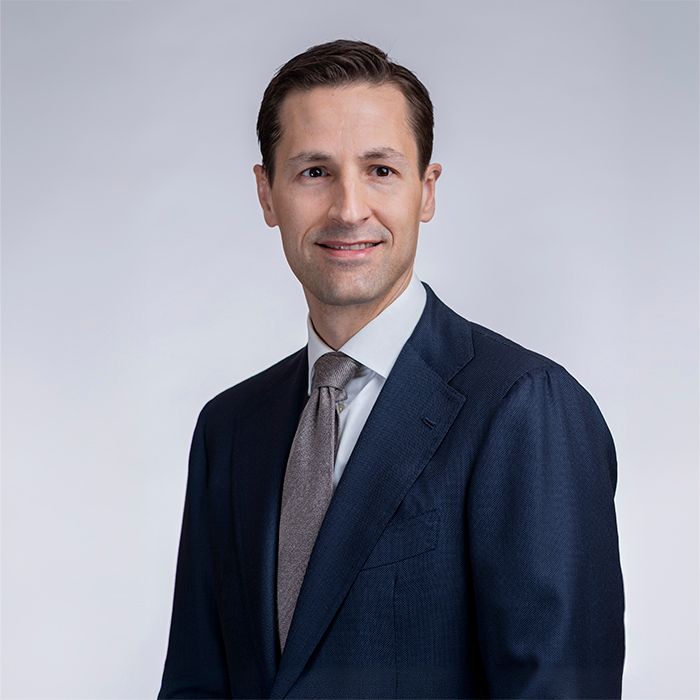
I’ve sat down with U.S. District Senior Judge William Alsup in his San Francisco chambers over the past half dozen years a couple of times to talk about the book projects he’s pursued on top of his judicial workload.
We spoke in 2019 about “Won Over,” his memoir about growing up in Mississippi during the Civil Rights movement. Then, when I visited him again in 2023, he rolled out 26 volumes of evidence from the Warren Commission report that served as fodder for “The Trial of Lee Harvey Oswald,” his novel about a fictional world where Oswald survived to stand trial for JFK’s assassination. (Alsup’s earlier book “Missing in the Minarets”—a historical account of the search for a San Francisco lawyer who went missing in the 1930s while climbing in the Sierra Nevada—sits on my bookshelf at home. Somehow, Alsup escaped my questions on that one.)
Last week, I once again trekked up to the 19th floor of the federal courthouse in San Francisco to meet with the judge to tackle one last chapter: his impending retirement from the bench.
Alsup, who took senior status in 2021, plans to fully retire at the end of the year. Although that stop date wasn’t completely set in stone when we met last week, Alsup hasn’t been taking on new cases since about May. Even then, he was taking a reduced caseload.
“I'm 80 years old, and I'd like to spend my last chapter as a rancher in the shadow of the High Sierra,” said Alsup, striking something of a lyrical tone. But the judge also mentioned more practical concerns including a desire to clean out the basement of his Bay Area home and the barn at his 40-acre ranch in the Sierra Nevada foothills, tasks he estimated will take him six and three months apiece. He also expressed a need to be home more to help his wife with a health issue. On that point, I did not prod for details.
Alsup said although he still had hundreds of cases at the beginning of the year, he’s “systematically” been “getting them to the goal line”—a place where they’re either wrapped up completely or ready to be handed off to another judge. He estimated that when he finally steps off the bench, there will be somewhere between four and six active cases left on his docket, including one case involving tens of thousands of student loan borrowers and the high-profile class action settlement in the copyright case authors brought against AI company Anthropic. Alsup avoided commenting on the ongoing cases other than estimating the Anthropic case would be ready for a final settlement hearing next summer in front of the judge who inherits it.
“What I'm trying to do is minimize the amount of work that my colleagues are going to have to pick up and to leave them happy that I didn't dump a lot of dogs on them, right?” he said. Alsup, a noted dog lover, quickly stopped himself to say he’d chosen the wrong analogy. But his desire not to be a burden to his colleagues was palpable.
“I have this built-in thing of wanting to get the case across the goal line. Not to not [say] which goal, just one of the two goal lines. I do feel strongly that, from a case management viewpoint, that's my job, is to get the case to the end and make sure everybody has a fair shot,” Alsup said. “They behave themselves, they go to trial, they settle the case, whatever they're going to do: Get it across the goal line. So, I have done that for the vast majority of my cases, and it's going to just be these few cases that are left over.”
Alsup, a Harvard Law graduate, clerked for U.S. Supreme Court Justice William Douglas, argued cases before the court while in the U.S. Solicitor General’s office and made partner at Morrison & Foerster before being confirmed to the federal bench in 1999. Posed with that list of career accomplishments, Alsup admitted that as a kid growing up in Mississippi, he could never have conceived of the career he’s had. He said that he and his best friend Ron Goodbread, who himself served as a magistrate judge in superior court in the District of Columbia, used to laugh as kids at just the concept of even visiting California. Alsup described it as the equivalent of today going to “Guam or Saipan or something.”
“We just laughed it off,” Alsup said. “Here we are in Mississippi, the poorest state in the country, and there's no way that's ever going to happen.”
Alsup said that even in college, he thought he would pursue engineering and end up his hometown of Jackson, or possibly Atlanta “if I really wanted to make a stretch.” Even when he started considering law school in his third year, Alsup says he thought he’d be a lawyer in Mississippi. “I thought of myself as like ‘Mr. Smith Goes to Washington.’ Like ‘Old Bill goes to the courthouse.’”
“I’d have a little small law office in downtown Jackson, getting in there and vindicating somebody's rights. That's kind of the model I had in mind at first,” he said. “It was later in law school [that] I began to have slightly broader horizons.”
The View on Good Lawyering From the Bench
Alsup has seen plenty of lawyering, both good and bad, since taking the bench in 1999. When we sat down, he was generous about going into the specifics about the good, but would only talk about the bad in broad strokes.
Unprompted, Alsup said one of the “best moments of lawyering” he ever saw was from Bob Van Nest, while the founding partner of San Francisco’s Keker, Van Nest & Peters cross-examined a key expert witness in the second Oracle v. Google trial over software copyrights. Although the cross was only about 20 or 30 minutes long, Alsup said it was “about as perfect as I’ve ever seen.”
Van Nest’s questions were not argumentative. Perhaps more importantly, they were short. Van Nest asked whether the expert did a certain kind of study as part of his report without editorializing. “Many lawyers would be tempted to work in some adjectives, like, ‘You didn't do the XYZ study, which is the normal thing to do, did you, Mr. Expert?’ Well, that gives the expert an out [to argue] that's not the normal thing to do,” Alsup said. “Most lawyers can't help themselves. Van Nest asked short questions [that] he knew read right into the impeachment material, and he picked out the top 10 things that he needed to establish. He established those things and let the witness go. It was a brilliant, brilliant cross-examination.”
Alsup also recalled a move by Ted Boutrous of Gibson, Dunn & Crutcher in a case brought by municipalities looking to hold Gibson’s client Chevron Corp. and other oil companies liable for damages stemming from climate change. Alsup said it was “brilliant” of Boutrous to admit climate change was real early. “That took that issue off the table and then shifted to, ‘Well, okay, it's real, but are the oil companies responsible for that?’ That was, to me, a brilliant move.”
“I would like to think if I had been a lawyer, I would have done the same thing. But I'm telling you, probably most lawyers would not have done that. They would have found some way to dance around it and say, ‘Well, judge, we'll get to that in the future.’”
Alsup also brought up the closing arguments federal prosecutor Katie Wawrzyniak gave in a 2020 criminal trial against a Russian man accused of hacking Silicon Valley companies including LinkedIn and Dropbox. “Her closing argument took what looked like a complete mess from the witnesses, and she laid it out beautifully to tie the facts together and then how it fit in with the law,” Alsup said. “She extracted from that mess and synthesized it, and again, did not overstate things to [make] a beautiful closing argument.” (Wawrzyniak has since left the government and works in-house at a Bay Area software company, according to LinkedIn.)
Lawyers who overstate things have become a growing pet peeve of Alsup’s. That much became clear as Alsup praising one of his opposing counsel from his days in practice: Doug Young, a stalwart of the local trial bar at Farella, Braun & Martel. “I would hate to be up against him, because he would have a tendency to win, win, win, because he was very good at picking the issues. But he was honest, not only to the judge and the jury, but to you as your opponent,” he said. “You could take his verbal word for it, and he would never renege.” Alsup said that he could probably rattle off another 25 people in the San Francisco bar who stood for that kind of civility. “They could afford to be. They were just good. They stuck with the facts.”
Alsup said that now, with the Northern District functioning as a national court with lawyers from across the country appearing in his courtroom, he’s noticed “a strong uptick” in the past 15 years of what he calls “half-truths” coming from the counsel well. “So, the lawyer will not lie … They won't say something that they know is false, like ‘The light was red’ when they know good and well it was green.”
“They will say something that sounds good for their case, but what they leave out is highly relevant. What they leave out would turn it around completely to actually work against them, or at least not be a strong point at all,” Alsup said. “Even to this day, I get sucked in and believe what they're telling me, until later we get into the record.”
“That's bothered me. That's not the practice that I grew up with.”
The Role of the District Judge
Toward the end of our conversation, I asked Alsup if the job of a federal trial court judge is any harder now than it was when he took the bench. I mentioned, in particular, the increasing number of documented threats against district court judges. I also raised the increase in activity on the U.S. Supreme Court’s emergency docket—cases where lower courts have been reversed without much guidance about the high court’s reasoning.
Alsup said that the job is “slightly” harder, but by how much is something that “can be exaggerated.”
“It is harder, but not dramatically harder,” he said.
In highly politicized cases, Alsup said the difficulty stems from the expedited nature of the cases and the fact that whichever side loses will inevitably appeal.
“You're doing it on a hurry-up basis, and it's harder to get it right because it's on a hurry-up basis,” he said. “The expedited fact-finding, the expedited briefing, the expedited trips to the Court of Appeals and Supreme Court—all of that is so fast that it doesn't give the judge as much time to do a completely thorough job.”
That said, Alsup added that whenever he’s had those sorts of cases over the past two administrations, he’s made time to deal with them. And he said although he’s received “at least” his share of threats, he’s turned them over to the U.S. Marshals and he has faith that he and his family won’t be harmed.
He also said he respect the U.S. Supreme Court, and he understands the justices have a “very hard job” to do.
“But I do think this: I think when it comes to the facts, that the ultimate trier of fact is the district judge. And under the rules, whatever we find as facts are not supposed to be set aside unless it's clearly erroneous,” Alsup said. He added that he thinks that “that concept has been given short shrift” and he’s disappointed that the Supreme Court hasn’t always given district courts’ fact-finding their proper deference. “I still respect the Supreme Court,” he said. “It's important to have a Supreme Court, and it's important for all of us to respect it.”
But he continued.
“The other thing that is worth saying here is that as much as I do respect the Supreme Court, I wish the majority, at least, would take into account the large numbers of district judges who have ruled mainly against the administration,” he said. “I wish that the administration, as well as the Supreme Court, would say, ‘You know, is there something there that we're missing given that it's not even [a 50/50 split], it's like 90/10 that the rulings [are going] against the administration?’”
At the end of our conversation, Alsup returned a favorite paradox of his.
The federal judiciary is the least democratic branch of government. Article III judges are appointed for life. They’re never elected. They have an enormous authority to enforce the laws Congress has passed and the Constitution.
Still, according to public opinion polls, the federal judiciary ranks among the institutions that the American public trusts most.
“Congress is way down there with the HMOs and labor unions. President is somewhere in between. The federal courts are way up there. I think sometimes the military edges us out, but otherwise we're way up there at the top,” Alsup said.
Why is that that the least democratic branch of government would have the most confidence of the public?
Alsup thinks it’s because so many people come through the courts as jurors. They see the process first-hand. “They can see that we decide things on the merits, not on politics.”
“The ordinary person thinks, ‘Oh, I don't have a chance in Congress. Could I go into Congress and see my representative and have my day in court there?' No, certainly not. At the White House, regardless of which party's in the White House? They have no chance. It's all politics—all politics and money.”
“But in the U.S. District Court, the party that deserves to win is most likely to win,” Alsup said. “I feel very strongly about that. It is a paradox, but there's a very good answer to it.”

Dec 16




 Deal Summary