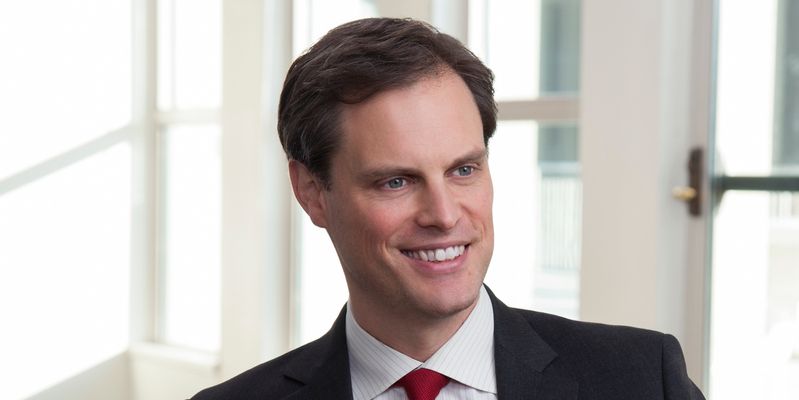
Live Nation does not illegally pressure concert venues or artists to use Ticketmaster and other of its services, its counsel told a Manhattan federal jury Tuesday, calling the entertainment giant a "fierce, lawful, legitimate" competitor as a closely watched antitrust trial opened.
Live Nation's counsel argued at the start of an antitrust trial that the company owns "very little" relative to the entire universe of over 20,000 venues in the United States. (Photo by Mario Tama/Getty Images)
A civil jury of 12 New Yorkers heard morning-long opening statements at the outset of a Sherman Act trial before U.S. District Judge Arun Subramanian that could last five weeks. Live Nation is seeking to beat claims by the government that it engaged in monopolistic conduct to control the live entertainment supply chain after its 2010 purchase of ticketing giant Ticketmaster.
"We do not have monopoly power, and we will show you that through the evidence," its counsel David Marriott told jurors. "This marketplace is more competitive than ever it has been before. Every customer we get is a hard-fought battle in a competitive market."
Relative to the entire universe of over 20,000 venues in the United States — including big stadiums largely owned by sports teams — Live Nation owns "very little," he said, arguing to the jury that the government is cherry-picking data related to amphitheaters to try to prove antitrust injury.
"There are more ticketing options today than ever there have been before," he said.
Openings unfolded after a detailed decision by Judge Subramanian last month that narrowed the issues for the jury. The panel must weigh allegations that Live Nation pressures artists who use its large amphitheaters to also use its promotional services, and that the company unduly ties the use of its venues to the use of Ticketmaster.
"The fans have a triable issue about antitrust injury," Judge Subramanian wrote in relation to the ticket-tying allegation, calling it the strongest part of the government's case. "Fans purchasing tickets from Ticketmaster may suffer the downstream consequences of any violation in the ticketing-services market, which could take the form of fewer shows, worse services, or higher fees."
In allowing the promoter-related claims to proceed, the judge cited evidence including a "situation in which an artist wanted to play at a Live Nation amphitheater with a different promoter but was rebuffed because the amphitheater was 'off limits to' that promoter."
Claims from 39 states and the District of Columbia — including from New York Attorney General Letitia James — also remain in play. The Empire State claims, among other things, that Live Nation's conduct saddles music fans with high prices and outrageous fees.
After the decision putting the case on track for trial, Live Nation executive Dan Wall said any effort by the U.S. Department of Justice to force the company to divest Ticketmaster was off the table. He added that the pursuit of a "meaningful" settlement was the superior course of action.
But with no settlement forthcoming amid comments from James' office that it would continue to pursue its case no matter what the feds do, Marriott told the jury that the live entertainment market is thriving.
Despite allegations that Live Nation has done "horrible things," what the company has actually done is "bring joy to people's lives," he said.
"They produce great concerts. They produce great live entertainment," Marriott said, adding that the jury will see evidence of "intense competition in the markets that are relevant" to the dispute.
Marriott followed the DOJ's David Dahlquist, who said the government will prove that Live Nation and Ticketmaster acted illegally to maintain monopoly power.
"Today the concert ticket industry is broken," Dahlquist said. "It is controlled by a monopolist."
Since their 2010 tie-up, Live Nation and Ticketmaster "have continued to grow their power" and "misuse their power," Dahlquist said. They control an 86% share of ticketing for large concert venues, a figure he said is not healthy.
Dahlquist said documentary evidence from the defendants' own workers will bear out the allegations. He said the jury will also hear from a competitor called AXS, which he said is stuck at a 9% market share because of barriers to competition that Live Nation has erected.
Another competitor, SeatGeek, will also feature prominently as trial unfolds, Dahlquist said. SeatGeek CEO Jack Groetzinger is expected to tell the jury that Ticketmaster used threats as it sought to block his company from signing clients.
"This is strong evidence of market power," Dahlquist said. He described a "flywheel" of control the company exercises via its venues, ticketing and promotions through which performers must pass.
"Live Nation and Ticketmaster control the connection between artists and fans," he said. "Ticketing fees are the highest they have been in the United States."
Amid billion-dollar profits, Dahlquist said, the jury will also see evidence that the company mocks concertgoers, including messages that Ticketmaster is "robbing them blind, baby."
Amid the alleged market abuses, Ticketmaster has allegedly failed to develop technological improvements — a sign that the market is not benefiting from healthy competition, he said.
Dahlquist cited ticketing snafus that exploded during Taylor Swift's wildly popular Eras Tour. He said the jury would see evidence related to "decreased innovation" as the government challenges Live Nation's contention that its position in the market is good for competition.
During opening statements, the jury also heard from a representative for the state plaintiffs, Jonathan Hatch of the New York Attorney General's Office, who said empirical evidence will show what fees would look like absent an alleged monopoly.
"Ticketmaster keeps $2.30 a ticket more" than competitors like AXS, Hatch said. "This is what Ticketmaster is taking just because it can."
Among other high-profile witnesses, the trial is expected to feature testimony from Michael Rapino, Live Nation's CEO. Dahlquist said Rapino's own words will help the government prove its allegations.
The government is represented by counsel including Bonny Sweeney, Lorraine Van Kirk and David Dahlquist of the U.S. Department of Justice's Antitrust Division.
The states are represented by their respective attorneys general.
Live Nation and Ticketmaster are represented by Al Pfeiffer, David Marriott, Tim O'Mara, Jennifer L. Giordano, Andrew Gass, Kelly Fayne, Lindsey S. Champlin and Robin L. Gushman of Latham & Watkins LLP and Lauren A. Moskowitz, Jesse M. Weiss and Nicole M. Peles of Cravath Swaine & Moore LLP.
The case is U.S. v. Live Nation et al., case number 1:24-cv-03973, in the U.S. District Court for the Southern District of New York.

Mar 3




 Deal Summary