The Sponsor
Loading page...



Private Equity
Mergers and Acquisitions
Corporate Finance
Securities Regulation and Corporate Governance
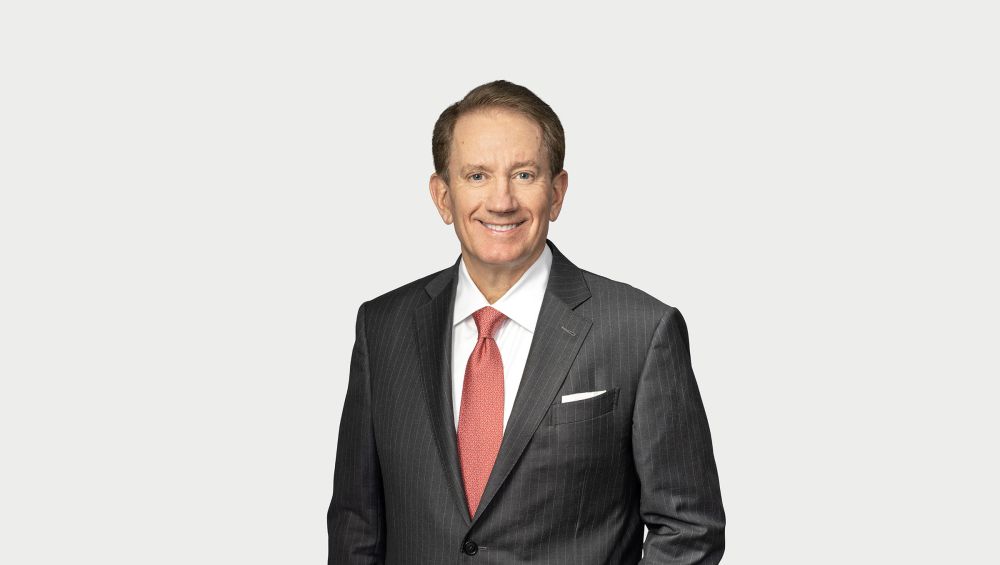
Sean P. Griffiths is a partner at Gibson Dunn in New York, where he serves on the firm's Executive Committee. With extensive experience in private equity, mergers and acquisitions, and corporate finance, Sean represents private equity firms and their portfolio companies in complex transactions. He is recognized by Chambers Global and Chambers USA as a leading private equity lawyer. Sean joined Gibson Dunn in 1986 after earning his JD from the University of Virginia. He also holds a Bachelor of Science in Finance from Purdue University. His notable clients include CVC Capital Partners and Investcorp, among others.
Sean P. Griffiths's representative experience includes advising:
Private Equity Transactions
Mergers and Acquisitions

 Deal Summary

- Investcorp acquired the target/assets from not available in a acquisition on not available. - Deal value was 2800000000 Sector: Industrial Services; Location: USA. - On the acquirer side, not available advised, led by Christopher Lang, Edward Wei, Maxwell Ball, Meghan Hungate, Michael Collins, Sean Griffiths.

Dec 04 2025
3B
Private Equity
Partner
2016 – Unknown


- Platinum Equity acted as the acquirer in this Acquisition transaction. - The acquisition was executed in the Recreational and Outdoor Living Systems sector, strengthening the buyer’s strategic position. - The transaction was announced on 2025-09-15 00:00:00 with a reported value of 2600000000
Sep 15 2025
3B
Private Equity

Earlier this year, in Urban Air Jacksonville v. Hinton, 415 So. 3d 1212 (Fla. 5th DCA 2025), Florida’s Fifth District Court of Appeal clarified the standard for determining the scope of an arbitration agreement in a dispute over whether activity was related or unrelated to an overall contractual agreement. In this matter, appellee John Hinton, a patron of the adventure and trampoline park appellant, Urban Air Jacksonville, brought a negligence lawsuit after he slipped and fell on liquid in the park’s restroom, claiming failure to maintain the premises and failure to warn of the dangerous condition. Urban Air subsequently motioned to stay and compel arbitration arguing that as a condition of participating in any activities on its premises, Hinton executed a release, assumption of risk, waiver of liability, and indemnification agreement including a mandatory binding arbitration agreement for any disputes. The agreement itself defined “activities” on its premises to include the standard adventure and entertainment experiences such as jumping, foam pits, rope course, climbing wall, etc, but went on to include use of “instruction, training, classes, observation, use of the locker room area, use of the dining area, use of any portion of the premises, including, but not limited to the associated sidewalks and parking lot.” The arbitration clause itself stated it was to cover any dispute relating to the listed activities of the agreement. Hinton objected to arbitration and argued the activities clause was too overly broad, did not specify it covered restrooms, and that the slip and fall bore no relation to the trampoline and adventure activities. The lower court agreed with Hinton, denied Urban Air’s motion, and found the claim was merely incidental to the waiver contract and did not arise out of, or have nexus to, the agreement activities that posed inherent risk. Urban Air appealed arguing that Hinton’s use of their entire premises was conditioned on executing their release and that the scope of the arbitration clause was purposely broad to encompass their entire operation. The Framework of Arbitration Clauses in Florida All arbitration agreements are based in contract law and Florida has a strong public policy in favor of arbitration. See Waterhouse Construction Group v. 5891 SW 64th Street, 949 So. 2d 1095, 1099 (Fla. 3d DCA 2007). A court determines “arbitrability under the Revised Florida Arbitration Code” Section 682.03, Fla. Stat. by assessing three elements: whether a valid written agreement to arbitrate exists; whether an arbitrable issue exists; and whether arbitration has been waived. See City of Miami v. Ortiz, 317 So. 3d 249, 252 (Fla. 3d DCA 2021). Disputes as to the scope of a waiver or an arbitration clause are meant to be “resolved in favor of arbitration rather than against it.” See Zager Plumbing v. JPI National Construction, 785 So. 2d 660, 662 (Fla. 3d DCA 2001). When an arbitration clause’s scope is challenged, this falls under the arbitrable issue element. See MacDougald Family Limited Partnership v. Rays Baseball Club, LLC, 371 So. 3d 988, 991 (Fla. 2d DCA 2023). Categories of Arbitration Scope: 'Arising Out Of' or 'Relation To' a Contract Measuring arbitration clause scope has developed into two near and far categories: narrow and broad. See Jackson v. Shakespeare Foundation, 108 So. 3d 587, 593 (Fla. 2013). Contrary to first thought, a broad arbitration clause scope does not uniformly lead to invalidation based on ambiguity. A narrow clause requires arbitration for disputes arising out of the subject contract. This requires arbitration where a claim has a direct relationship to the contract's specific terms. On the other hand, a broad clause allows for arbitration when a dispute either arises out of or simply has a relation to the contract. However, the relationship still must be significant to the terms of the contract and not attenuated. The Fifth District’s Guidance to the Scope Distinction In the Urban Air matter, the court looked to the Florida Supreme Court case, Seifert v. U.S. Home, 750 So. 2d 633 (Fla. 1999) where a widow sued a home builder for wrongful death of her husband after a carbon monoxide leak occurred. The home builder moved for arbitration based on the home sale contract. However, on the Supreme Court’s review, the court barred arbitration because there was a total absence of language relating to negligence or personal injury. While the Seifert case stopped immediately at the contract’s lack of negligence waiver, the Fifth District was forced to go further as negligence was already contemplated by the arbitration clause. Hinton argued that there was no relation to restroom use and the agreement to use Urban Air’s trampoline park. However, the court disagreed that the contract did not contemplate restroom or other areas outside its adventure activities. It acknowledged that the contract’s listed “activities” did not include the restroom, but they included numerous other areas not related to the trampoline park such as their locker room, dining area, sidewalks, parking lot, and any “portion of the premises.” To even enter the facility, Hinton had to agree to the waiver. Given the varied activities listed in the contract, the court held there was a substantial relationship between the arbitration clause and Hinton’s injury. The Urban Air opinion gives a great roadmap for drafting effective broad-scoped arbitration agreements. Simply including negligence or personal injury in an arbitration agreement may not be enough. Having a well-defined, all-encompassing description of all business activities or locations can likely protect against unexpected injuries regardless of location or circumstance, near and far. Sean P. Greenwalt is an associate in the amusements, sports and recreation liability practice group in the Tampa office of Marshall Dennehey. He also handles insurance coverage and fraud/special investigation matters. He may be reached at SPGreenwalt@mdwcg.com
Dec 3
4 min