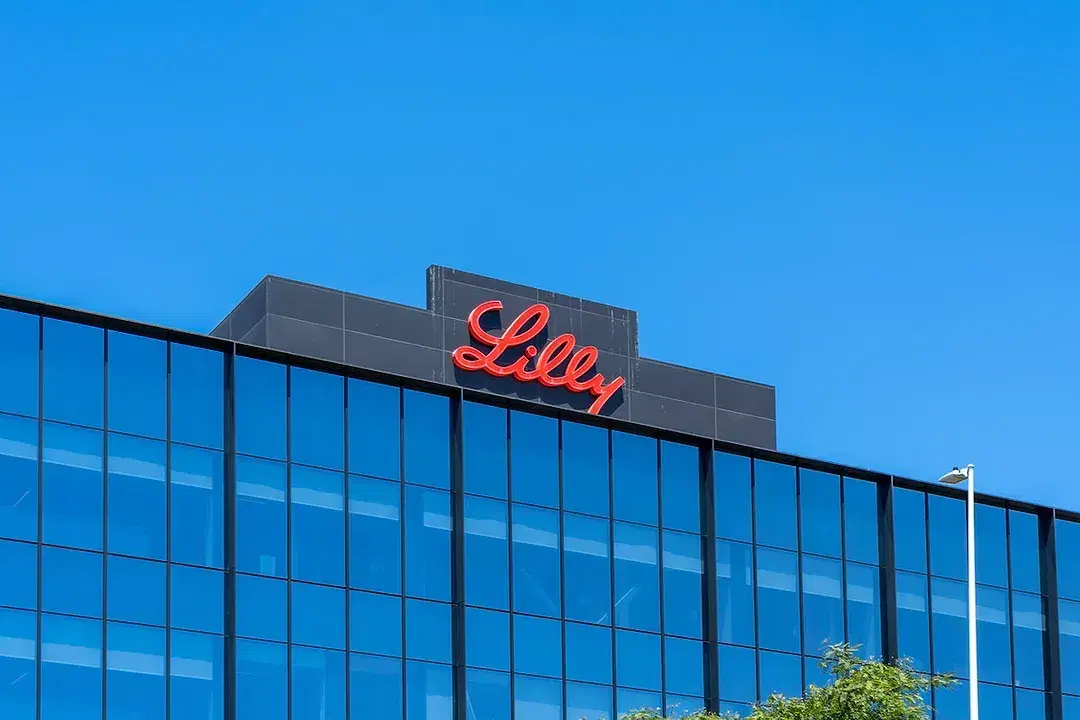
A coalition of 21 states and two business groups told the U.S. Supreme Court on Monday that lower courts' allegedly premature certification of collective actions drives up the cost of litigation and forces employers into multimillion-dollar settlements, backing Eli Lilly & Co. in a worker's age bias case.
The amicus briefs by a coalition of states and a pair of business groups follow Eli Lilly's October petition seeking Supreme Court review of a Seventh Circuit decision that the company says introduced a new standard for certifying collective actions that clashes with the Fifth and Sixth circuits. (iStock.com/JHVEPhoto)
A group led by Ohio Attorney General Dave Yost, including 20 Republican state attorneys general and the Republican-led Arizona Legislature, argued in an amicus brief that conditional certification of a collective action is "a creature of judicial innovation" that imposes massive costs on defendants and that it needs to be undone. The U.S. Chamber of Commerce and the CHRO Association told the Supreme Court in their own amicus brief that, at the very least, it needs to clarify when lower courts can order notice of a proposed collective action to be sent to nonparties.
The amicus briefs follow Eli Lilly's October petition seeking high court review of a Seventh Circuit decision that the company says introduced a new standard for certifying collective actions that clashes with the Fifth and Sixth circuits.
According to the states, conditional certification in suits under the Fair Labor Standards Act, the Equal Pay Act and the Age Discrimination in Employment Act allows notices to be sent to workers who may want to opt in. However, the states argued that "conditional certification is often the ballgame" because even before employees opt in, the case proceeds with discovery and motion practice.
"There exists no other authority — constitutional, historical, traditional, or otherwise — that allows judges to reach beyond the courthouse steps to solicit non-parties into court," the states wrote. "In sum, court-sanctioned plaintiff solicitation sits outside the judicial power."
Instead, the states said conditional certification of collective actions comes from the Supreme Court's 1989 decision in Hoffmann-La Roche Inc. v. Sperling , which held that courts can determine that absent employees are likely similarly situated and approve a notice inviting them to join the suit.
However, lower courts don't agree about when to send such notices, as the law says nothing about conditional certification, which sows confusion, according to the states.
"States, like all defendants staring down multi-million-dollar demands, deserve clear guidance," the states wrote. "Without any clear rule, states will continue to bear the cost of a practice untethered from statutory text, constitutional principles, and history and tradition."
Joining Ohio and Arizona in the amicus brief are attorneys general from Alabama, Arkansas, Florida, Georgia, Idaho, Indiana, Iowa, Kansas, Louisiana, Missouri, Nebraska, North Dakota, Oklahoma, South Carolina, South Dakota, Tennessee, Texas, Utah and West Virginia.
Similarly, the Chamber and CHRO Association said many courts allow notice of collective actions to be sent out "almost as a matter of course," based on the lack of guidance, allowing plaintiffs "to greatly expand the scope of collective actions at will, creating significant in terrorem settlement pressure."
The business groups argued that if the Supreme Court decides not to fully upend Hoffmann-La Roche, it should at least tell lower courts to determine whether employees are "similarly situated" before allowing notices to be sent. According to the amicus brief, the commonality, typicality and predominance requirements that guide certification of class actions could easily be applied to collective actions as well.
"And because courts uniformly require plaintiffs to prove the class certification factors by a preponderance of evidence, the same standard should apply to collective actions," the Chamber and CHRO Association wrote.
Eli Lilly's petition for certiorari stems from a 2023 lawsuit in which sales worker Monica Richards accused the company of preferring to promote millennials over older employees. An Indiana federal court granted collective certification in 2024, and Eli Lilly subsequently challenged that decision.
A Seventh Circuit panel ruled in August that district courts must consider evidence from both sides to determine whether workers are sufficiently similarly situated to proceed together. The majority also concluded that courts may issue notice to potential plaintiffs when the named plaintiffs have raised at least a material factual dispute regarding the similarity of potential plaintiffs.
Harold Lichten, who is representing the workers, told Law360 that he was "somewhat surprised that so many states apparently believe that large companies who demonstrate a pattern of discriminating against older workers believe that such workers should not receive fair notice of a pending lawsuit so that they can participate and vindicate their rights."
"As for the Chamber of Commerce, I was expecting no less," Lichten wrote.
Representatives of Eli Lilly did not immediately respond to requests for comment Monday.
Eli Lilly is represented by Jonathan M. Linas, E. Michael Rossman, James R. Saywell, Noel J. Francisco, Chris Pagliarella and Annie M. Wilson of Jones Day.
Richards is represented by Harold Lichten of Lichten & Liss-Riordan PC.
The states are represented by their respective attorneys general.
The U.S. Chamber of Commerce and the CHRO Association are represented by Jennifer B. Dickey and Jonathan D. Urick of the U.S. Chamber Litigation Center, G. Roger King of the CHRO Association, and Scott A. Keller and Drew F. Waldbeser of Lehotsky Keller Cohn LLP.
The case is Eli Lilly and Company et al. v. Monica Richards, case number 25-476, in the U.S. Supreme Court.

Nov 17






 Deal Summary